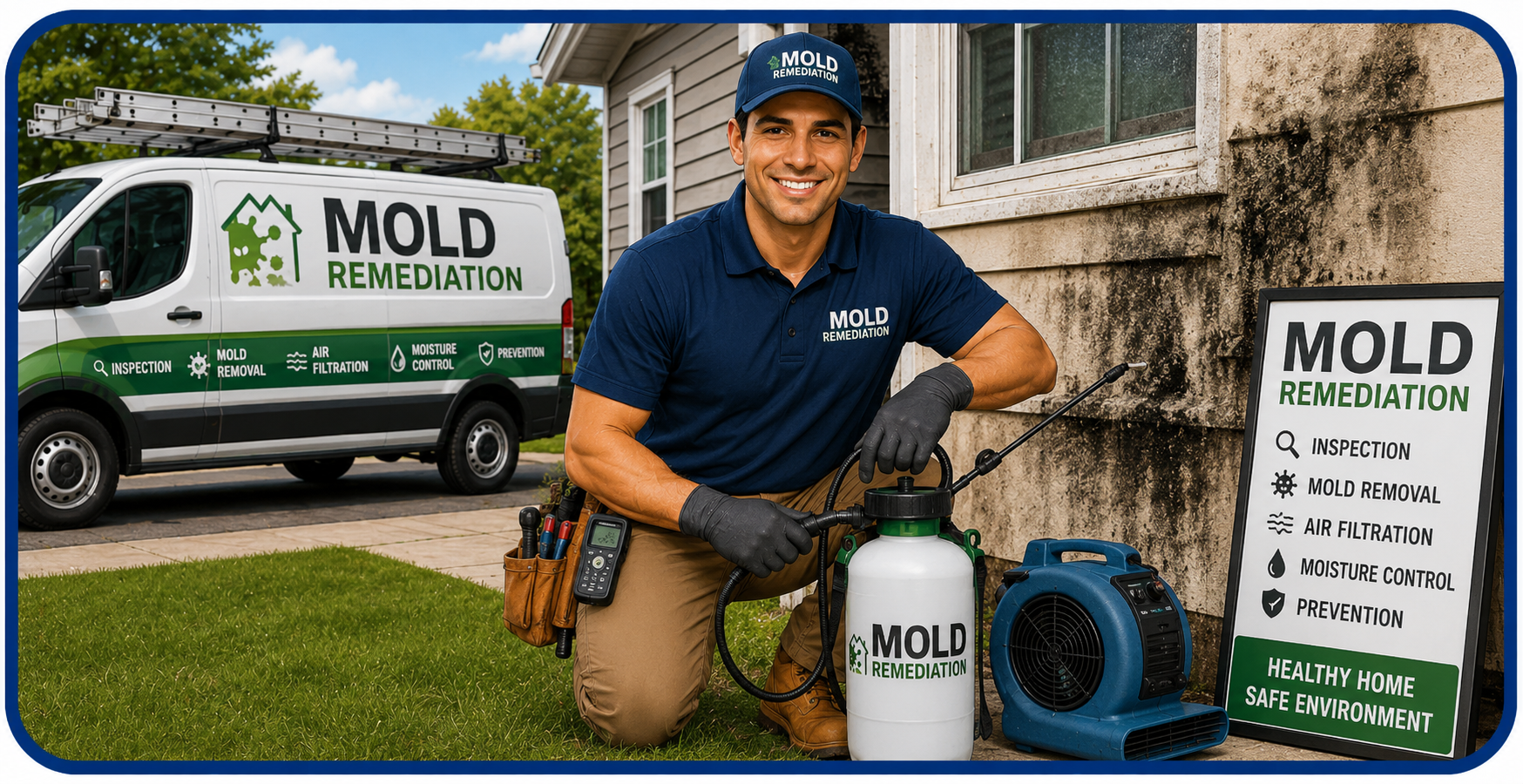
From pre-purchase buyer inspections to post-remediation clearance, every scenario covered with the same rigorous protocol.
🏠
Pre-Purchase Buyer Mold Inspection
Pre-purchase mold inspections in Harbert include thermal imaging of walls and ceilings, moisture readings at known risk zones (around windows, HVAC, crawl spaces, bathrooms), and air sampling sent to an accredited lab. Written report delivered within 24–48 hours of sample receipt.
🔒
Post-Remediation Clearance Inspection
We perform post-remediation clearance inspections for both property owners who used other contractors and as an independent verification step for our own remediation work. Written clearance reports are usable for insurance and real estate disclosure purposes.
📈
Odor Investigation & Hidden Mold Survey
When you smell mold but can't see it, our Harbert, MI odor investigation protocol uses non-invasive tools to locate the source. Thermal camera sweeps, systematic moisture readings, and targeted air sampling tell us where to look — and what we find — before any opening of walls.
🏢
Commercial & Multi-Family Property Inspection
Office buildings, schools, apartment complexes, and retail spaces in Harbert, MI require thorough documentation for liability, tenant relations, and insurance. Our commercial Mold Inspection teams cover multiple floors, HVAC systems, and shared spaces — producing zone-by-zone written reports with air sample data for each inspected area.
💧
Water Damage & Moisture Intrusion Assessment
Post-flood and post-leak moisture assessments in Harbert use calibrated pin and pinless meters, thermal imaging, and psychrometric readings to map the full moisture extent. Written report identifies zones at high risk of mold development based on material type and moisture content readings.
📄
Real Estate & Landlord Disclosure Inspection
Sellers, landlords, and property managers in Harbert, MI use our written Mold Inspection reports to satisfy disclosure obligations and protect against future liability. Our reports include photos, air sample data, moisture readings, and inspector findings — the documentation that holds up if questions arise later.